Wellness
Peyronie’s disease, a curvature or bend in the penis caused by fibrous scar tissue under the skin, can often be managed without surgery, especially when caught in its earlier stages. Non-surgical approaches include shockwave therapy, traction devices, and regenerative injections such as the P-Shot, all aimed at breaking down scar tissue and improving blood flow to the area. According to the American Urological Association, most men experience the condition in two phases, an active phase where the curvature is still changing, and a stable phase, and treatment approach differs depending on which phase a patient is in.
What Causes Peyronie’s Disease?
Peyronie’s disease develops when scar tissue, known as plaque, forms in the sheath surrounding the erectile tissue of the penis. This plaque does not stretch the way healthy tissue does, so during an erection it pulls one side tighter than the other, creating a curve, indentation, or narrowing.
Most cases are linked to an injury to the penis, sometimes so minor the man never notices it happened, that heals abnormally. Genetics, certain connective tissue disorders, and age also appear to play a role, since the condition becomes more common after 40.
What is seldom discussed is that the injury does not need to be dramatic. Repeated microtrauma during normal sexual activity is a more common trigger than a single acute event, which is why many men cannot recall the moment it started.
How Do Doctors Diagnose Peyronie’s Disease?
Diagnosis typically starts with a physical exam and a conversation about when the curvature began and whether it has changed recently. A difference of even a few degrees can be clinically significant depending on how it affects function.
In many cases, a provider will measure the plaque directly and may use ultrasound imaging to assess its size, location, and whether calcification has occurred. This distinction matters because calcified plaque tends to respond differently to non-surgical treatment than newer, softer scar tissue.
Timing the diagnosis to the active versus stable phase changes the entire treatment conversation, which is why an in-person exam rather than a phone consultation is the standard approach.
What Non-Surgical Treatments Are Available?
Several non-surgical options exist for men who want to address curvature and delay or avoid surgical correction.
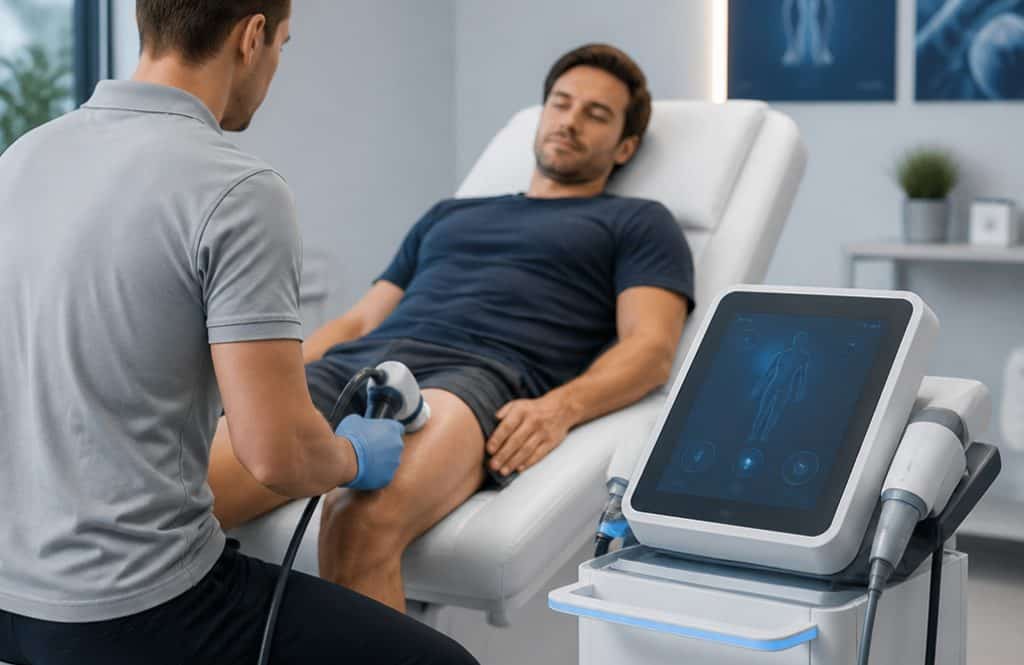
- Shockwave therapy, such as DualStim, uses low-intensity acoustic waves to stimulate blood flow and encourage the body to break down fibrous plaque over a series of sessions
- The P-Shot, a platelet-rich plasma injection, introduces growth factors directly into the penile tissue to support healing and improve blood flow
- Traction and vacuum devices apply gentle, sustained mechanical stretch to the affected tissue over time
- Oral supplements and topical treatments are sometimes used as an adjunct, though clinical evidence for these alone is limited
Research shows that combining more than one of these approaches, rather than relying on a single treatment in isolation, tends to produce more noticeable improvement in curvature and comfort during the active phase.
Who Is a Good Candidate for Non-Surgical Treatment?
Men in the active phase of Peyronie’s disease, generally within the first 12 to 18 months of noticing symptoms, tend to be the best candidates for non-surgical intervention, since the plaque is still evolving and more responsive to treatment.
Men whose curvature has stabilized for a year or more, or whose curvature significantly interferes with intercourse, are sometimes better suited for a surgical consultation instead. This is why an accurate diagnosis and honest conversation about phase and severity matters more than which specific therapy a patient has read about online.
A full hormone and vascular health evaluation is also part of a thorough workup, since underlying issues like low testosterone or poor circulation can influence both the condition and how well a man responds to treatment.
What Should You Expect During Treatment?
Non-surgical treatment for Peyronie’s disease is not a single-visit fix. Shockwave protocols typically involve a series of sessions scheduled over several weeks, and most men tolerate the treatment with minimal discomfort and no downtime.
Improvement is usually gradual rather than immediate, and results vary from patient to patient based on plaque size, location, duration of symptoms, and overall vascular and hormonal health.
Can Peyronie’s Disease Be Treated Without Surgery?
In many cases, yes. Non-surgical options such as shockwave therapy, traction devices, and regenerative injections like the P-Shot are commonly used, especially during the active phase of the condition when the curvature is still changing. Surgery is generally reserved for cases where curvature is severe, has been stable for a year or more, or significantly interferes with intercourse. A physician evaluation determines which category a patient falls into.
How Long Does It Take to See Improvement From Shockwave Therapy?
Most men complete a series of sessions over several weeks before evaluating results, and improvement tends to be gradual rather than immediate. Response varies based on plaque size, location, and how long the condition has been present, which is why a baseline exam and follow-up assessment are both part of a complete treatment plan.
Does Peyronie’s Disease Go Away on Its Own?
Some mild cases stabilize without treatment, but many men experience worsening curvature during the active phase if left unaddressed. Because the active phase is also when non-surgical treatment tends to work best, waiting to see if it resolves on its own can mean missing the window when intervention is most effective.
Is Peyronie’s Disease Related to Low Testosterone?
They are not the same condition, but hormonal and vascular health can influence how the body heals scar tissue and how well a man responds to treatment. A comprehensive hormone panel is often recommended alongside a Peyronie’s evaluation for this reason.
Can Shockwave Therapy and the P-Shot Be Used Together for Peyronie’s Disease?
Yes, and many providers combine the two approaches specifically because they work through different mechanisms, shockwave therapy stimulating circulation and plaque breakdown, and the P-Shot introducing growth factors to support tissue healing. Combining therapies is common in an active-phase treatment plan.
Conclusion
Peyronie’s disease is more treatable, and more common, than most men realize, and non-surgical options like shockwave therapy and regenerative injections offer a real path forward for many patients, particularly when addressed early. Dr. Richard Gaines and the team at LifeGaines have helped Boca Raton men understand their options and build a treatment plan suited to their specific condition and phase. If you have noticed curvature, pain, or changes in your erections, call (561) 931-2430 to schedule a confidential evaluation.
Individual results vary. This content is educational and is not a substitute for professional medical advice, diagnosis, or treatment. Please consult a licensed physician before starting any treatment.

Dr. Richard Gaines is the Chief Medical Officer of LifeGaines Med Spa in Boca Raton. He attended the Boston University School of Medicine, completed an internship at the Tufts University of Medicine, and his residency at the Harvard School of Medicine. Today, Dr. Richard Gaines is at the forefront of the rapidly evolving sexual health paradigm. He continues to innovate with new anti-aging treatments to enhance and extend the lives of his patients. His effective forms of regenerative medicine, hormone therapy, and wellness treatments are designed to help people of all ages improve their energy, drive, sexual health, and overall wellness goals.